There's a special kind of pain in football gaming that has nothing to do with conceding a 90th‑minute kick‑off goal. It's that creeping feeling that the game you loved last week suddenly handles like a shopping trolley with one wonky wheel — and the developers are insisting nothing has changed. That's exactly where the EA FC 25 community found itself after Title Update 8, the so‑called 'best patch in FIFA history,' and the shadowy rumours that followed.
Let's rewind to late 2024. EA FC 25 rolled out of the tunnel with the grace of a hungover Sunday league goalkeeper. EA's CEO Andrew Wilson, during an earnings call, admitted the game 'underperformed' at launch — corporate speak for 'we fumbled the bag.' The team scrambled, and Title Update 8 arrived like a tactical substitution that actually works. Passing was buffed, AI defending was nerfed, and suddenly every attack felt sharper than Tabitha Chawinga tearing down the wing on a counter. Goals flowed, creativity returned, and for a brief, glorious moment the community was united in joy. Social media lit up with praise, many calling it the most playable FIFA in years.
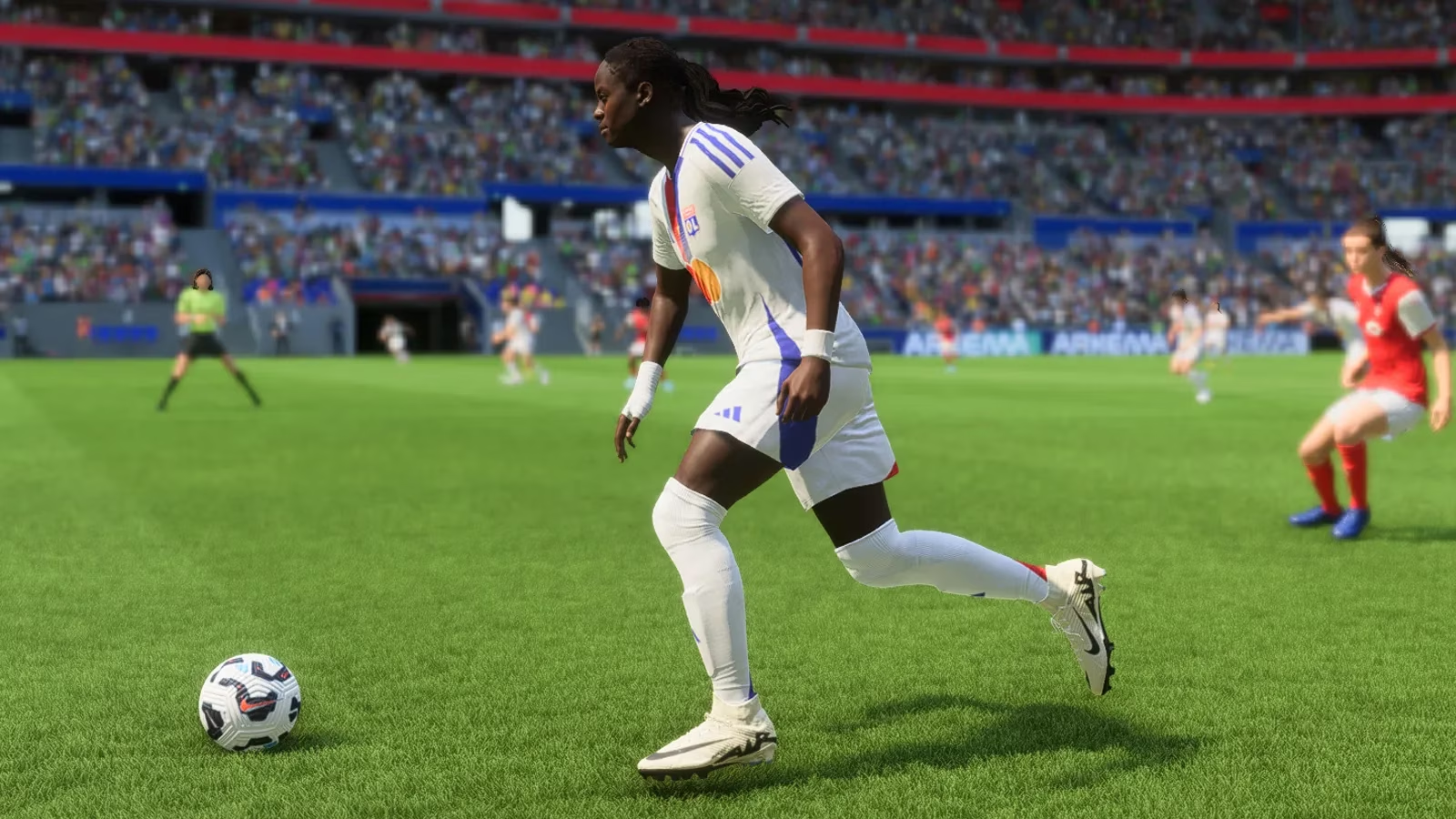
Then the honeymoon ended. Players started whispering in Discord servers and on forums: "Does the game feel different again?" "Did they shadow‑nerf passing?" "AI defending seems stronger…" It was as if a barista had swapped your favourite espresso beans with decaf and then gaslit you with a smile. The conspiracy theory took hold — EA had secretly reverted some of Title Update 8's beloved changes without telling anyone. The proof was in the pitch‑feel, that sixth sense thousands of hours of muscle memory can detect, even when patch notes say otherwise.
In response, EA released Title Update 9 and dropped a statement straight from the PR playbook: "As a reminder, we are not making any changes to the balance of the game in this update after seeing your recent feedback." Translation: "We heard you, but trust us." The update itself was a mixed bag of long‑awaited features and a controversial new rule. Players could finally grind two Evolutions at once — a genuine quality‑of‑life win. At the same time, quitters who left 0‑0 matches before the 45th minute would be punished, though you only get credited with a win if half the match has elapsed. That's a bit like telling a thief he can keep the loot if he's already run three blocks; it's half‑measure justice.
The community's reaction to the reassurance was less 'thank you' and more 'you've got to be kidding me.' One player asked bluntly, "Have you nerfed the previous patch changes?" Another summed up the mood: "Whatever has happened to the game in the last few days has brought it back to the bad days. You literally had the most fun and playable FIFA in years." Comments like these reveal a trust deficit deeper than a defensive line playing an absurdly high offside trap. It's like a partner who's been caught cheating once before — every minor change in behaviour triggers suspicion, even if this time they're genuinely just working late.
Why this paranoia? Because football game patches are a delicate ecosystem. Tweak one slider — passing error, defensive awareness, shot power — and the whole meta can wobble like a goalkeeper trying to save a knuckleball. Title Update 8 had danced perfectly on that knife edge, and any subsequent update, even one that didn't intentionally touch gameplay balance, could shift things through server‑side adjustments or unintended interactions with new code. When a game lives online, the "invisible hand" of developers can subtly cook the sauce while diners are still eating. And EA's track record of silence on hidden tunings in past FIFA titles stains every promised fix with doubt.
It doesn't help that EA FC 25's launch was a mess. The psychological impact of a bad first impression means the community is already primed to expect disaster. Title Update 8 was the comeback story, the 3‑0 halftime recovery. A secret revert would be the ultimate betrayal, like a stadium announcer declaring a last‑minute winner and then VAR chalkes it off for a phantom offside. Fans had tasted champagne football, only to suspect someone switched back to flat soda while they weren't looking.
The whole saga teaches us one lesson: transparency isn't just a nice‑to‑have in live service games, it's the oxygen that keeps the player‑developer relationship alive. When every micro‑adjustment can feel like a betrayal, studios need to over‑communicate, maybe even release internal testing notes, to prove they aren't fiddling with the core loop in the dead of night. Otherwise, the paranoia becomes self‑fulfilling — players perceive differences because they're looking for them, and confirmation bias ties every bobbled pass to a conspiracy.
As of 2026, looking back, Title Update 9 didn't officially revert the magic of TU8. But the damage was done. The community's fear of the secret nerf became a permanent ghost haunting the game's lifespan. And honestly, can you blame them? In a world where your virtual left‑back's positioning can change overnight without a whisper, trust becomes as fragile as a centre‑back's composure in a penalty shootout. EA might have patched the code, but patching hearts? That requires a lot more than a developer tweet.