The relationship between a player and EA FC can be a complicated one. For many, the yearly ritual of firing up the latest title is a familiar comfort, a way to unwind without the narrative commitment of a sprawling single-player epic. As life's responsibilities grow, the marathon gaming sessions of youth give way to stolen moments—a quick match here, a half-season there. The game becomes a reliable, if sometimes repetitive, escape. Yet, within that familiar landscape of digital grass and pixelated players, moments of pure, unscripted joy can still emerge, reminding even the most jaded casual player why they fell in love with the beautiful game in the first place.
For the modern adult gamer, EA FC often serves as the ultimate brain-off game. It's a perfect solution for those evenings when you crave the engagement of a controller but lack the mental bandwidth for a complex story or a high-stakes competitive shooter. It sits neatly in that library of comfort titles—alongside classics like Tony Hawk's or Astro Bot—ready to fill an hour or two. The rhythm is familiar: the whistle blows, the crowd roars, and for a little while, the outside world fades away. The pressure is low, especially when avoiding the often-frustrating grind of Ultimate Team. Sticking to Online Seasons, a player might find a comfortable plateau in the middle divisions, a space where skill is decent but the relentless meta doesn't dominate every pass. It's a digital kickabout, a simple pleasure.
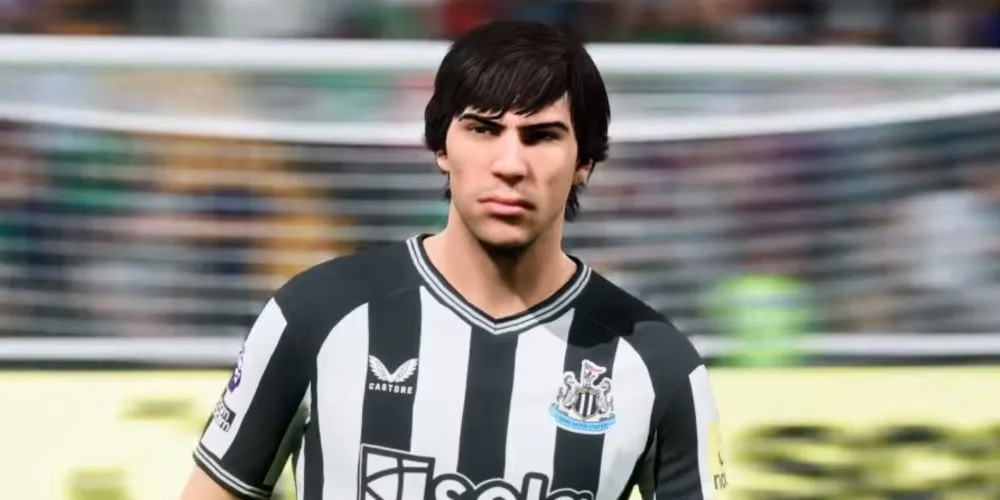
However, the online experience is famously inconsistent. Matchmaking can feel like a cruel lottery, pitting your carefully chosen lower-league side against a galactico-filled juggernaut for the tenth time in a row. The initial excitement of a new Career Mode save with a favorite player, like Newcastle's Sandro Tonali, can quickly wane. The grind of a full season feels like a distant dream when real life intervenes, leaving your save file languishing in October. So, you jump online, bracing for the usual mixed bag of results: a scrappy win, a frustrating loss, a forgettable draw. The games blur together into a tapestry of decent, if unremarkable, football.
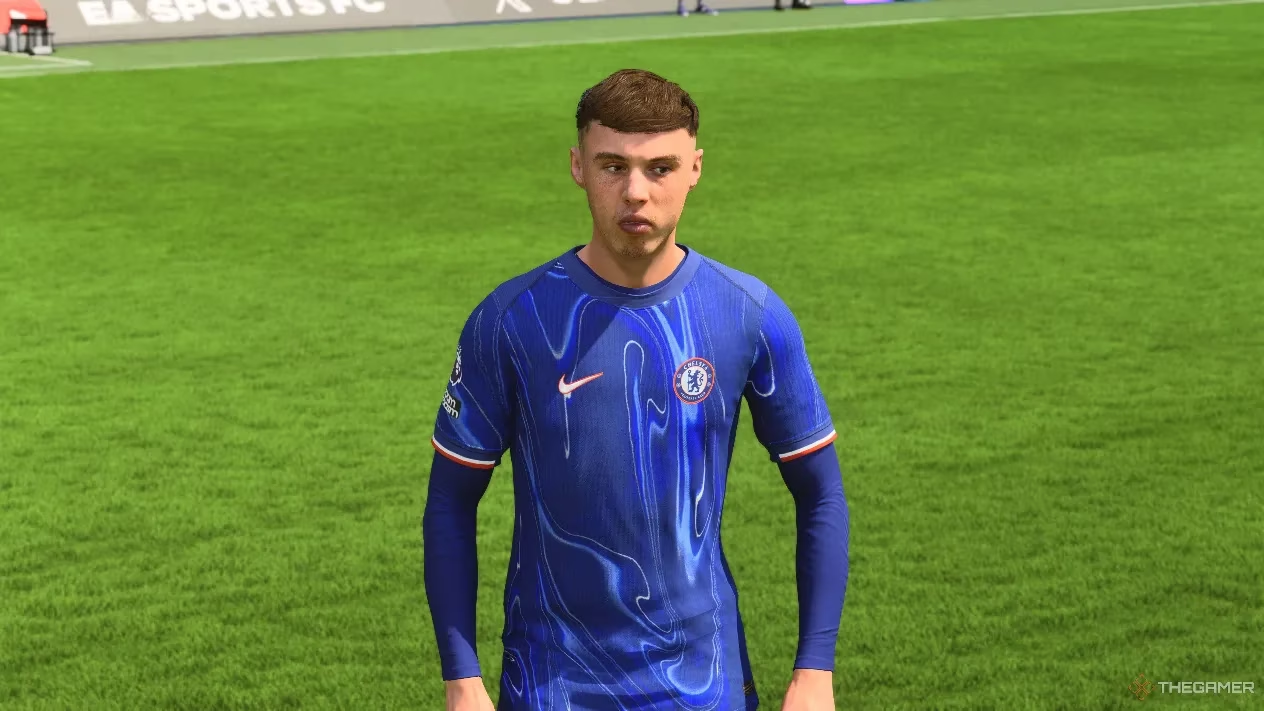
Then, something unusual happens. You get matched with someone... different. Not a smurf account designed to crush newcomers, but a genuine player who is, to put it kindly, having an off day. Their defenders stumble over the ball as if it's coated in grease. Their midfield passes find only your players. Their strikers, when they miraculously receive possession, seem magnetically drawn to the touchline. You, perhaps playing as a team like Chelsea just for a change of pace, find every move working. Cut inside? The defender is baffled. Chip the keeper? He's already stranded. By halftime, the scoreline is a merciless 5-0. The social contract of online gaming suggests what comes next: the inevitable rage quit during the halftime break. You prepare to take your three points and move on.
But they don't quit. The second half begins, and your opponent returns, seemingly undeterred by the impending demolition. This is the moment the game transforms.
A Shift in the Narrative
Instead of pressing for more goals, a silent understanding passes between the two avatars on the pitch. The competitive drive evaporates, replaced by a shared desire for pure, silly fun. What follows isn't a football match anymore; it's a playground. You stop trying to score and start trying to entertain. The ball is pinged back and forth in elaborate sequences of head tennis, defenders and strikers alike joining in. Dribbles become showcases of flashy skill moves, executed with no intent to advance, just for the spectacle. Goalkeepers are summoned from their boxes to join the outfield nonsense, sprinting up the pitch with comical urgency. Audacious shots are launched from the halfway line, greeted with laughter whether they sail into the top corner or row Z.
The final whistle blows on a 7-4 scoreline, a result that flatters the defender but tells the true story of the second half's chaotic collaboration. The victory points are irrelevant. What matters is the memory created—a spontaneous, joyful deviation from the script. It’s a throwback to the days of couch co-op, where the goal wasn't to win but to create the most hilarious highlight. This single, bizarre match becomes the most memorable experience of the entire gaming season, a stark contrast to the hundreds of "proper" but forgettable games.
This encounter highlights a beautiful, often overlooked truth about online gaming. The relentless pursuit of promotion, the obsession with the meta, the frustration with broken mechanics—it can all cloud the simple, original purpose: to have fun. In a landscape often dominated by toxicity and win-at-all-costs mentalities, finding a fellow traveler who prioritizes joy over the result is a rare gift. It serves as a potent reminder that sometimes, the most rewarding way to play isn't to dominate, but to connect, even wordlessly, with another player and collectively decide to make your own fun.
So, the next time you're stuck in a division, grinding out results, consider this: maybe the path to gaming happiness isn't always forward on the ladder. Perhaps it's in taking a moment to pass the ball around the back, to attempt that impossible overhead kick from a corner, or to simply acknowledge a fellow player's spirit with a friendly, pointless game of keep-away. After all, in the end, it really is the taking part—and how you choose to take part—that counts the most.