I still remember the collective groan that echoed through the FIFA community when EA FC 25 launched back in late 2024. The game felt… off. Near-post shots were basically cheat codes, defenders recovered like cheetahs on an energy drink, and passes seemed to float through syrup rather than zip along the turf. Many of us—myself included—set our controllers aside and moved on. The magic had faded, and the numbers proved it. In late January 2025, EA themselves admitted during an earnings call that the title had underperformed. But honestly, that moment of corporate honesty was the best thing that could have happened to the series.
For the first time in years, the developers had no choice but to actually listen. They knew the community wasn’t just whining for the sake of it. We wanted a football sim that felt responsive, fair, and alive. And I’ll tell you, the response that came next was nothing short of miraculous. Title Update 8 dropped on January 16, 2025, and it was like someone had finally opened the windows in a stuffy room. Overnight, overpowered near-post finishes were reeled in, defenders no longer magnetically warped onto pacey wingers, and passing finally had some zip. The whole game breathed again. Players—some of whom had uninstalled completely—started posting clips with captions like “we’re so back.” Some even called it the best patch in FIFA history. I couldn’t disagree.
When EA’s CEO sat down for the February 4 earnings call and revealed that over two million Ultimate Team players had been “re-activated” since the update, I actually laughed out loud. Not because I doubted it—because I could feel it in every online match. Lobbies filled quicker, Rivals felt competitive again, and even the transfer market started humming. These weren’t casual tourists; these were hardened veterans who had completely abandoned the title, now thumbing their way through Squad Battles and FUT Champions like old times. It was pure resurrection.
EA didn’t just stop there. Title Update 9 followed, polishing the rough edges and teasing fans with promises of content that actually mattered. Rumors swirled that Diego Maradona was finally coming back to the series after a three-year hiatus, alongside Ultimate Team cult heroes like Gervinho, Seydou Doumbia, and Victor Ibarbo in the upcoming Grassroots Greats promo. The nostalgia hit hard, but this time it felt earned—not just a cash grab, but a celebration of the football culture we’d all missed.
The revival wasn’t without its drama. Some players whispered that the gameplay had secretly reverted to its launch mess after the initial buzz. EA, to their credit, shut that down fast, confirming publicly that no gameplay tweaks had been made since Title Update 8. That transparency mattered. For a franchise often criticized for moving in silence, it felt like the developers were finally treating us like a community, not just a user base.
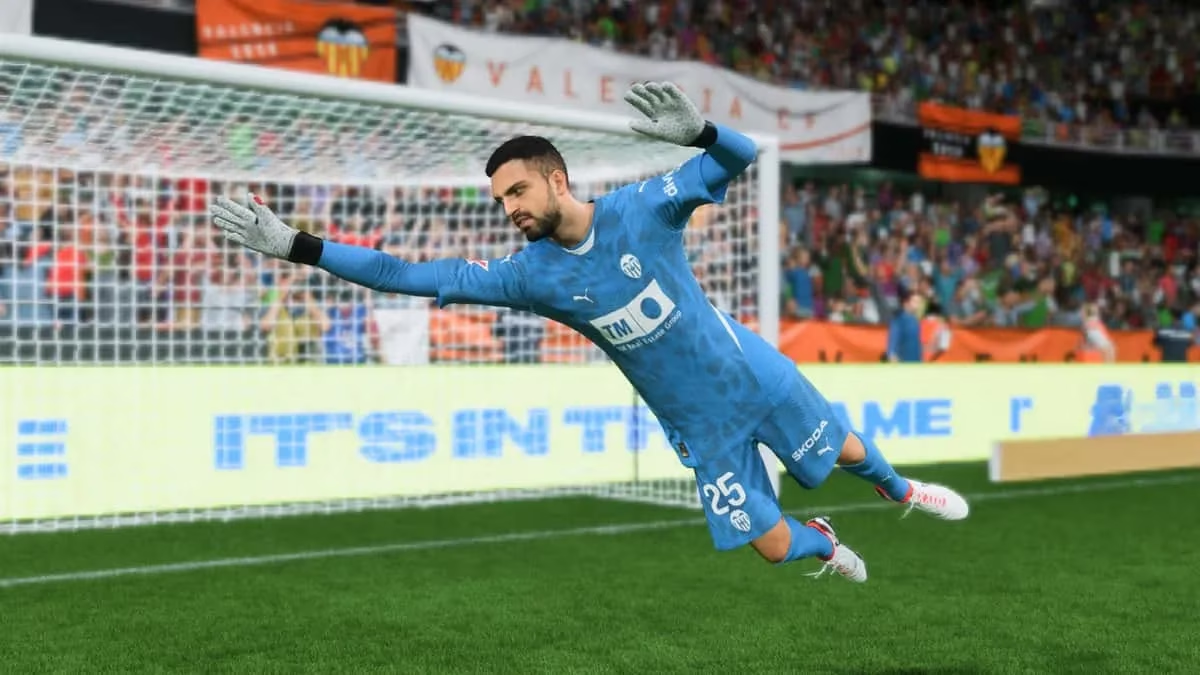
And what about the young guns? As the game stabilized, fresh talents began to shine in ways that felt intuitive rather than exploitative. Take goalkeepers, for instance—finally, you could build a future around a promising shot-stopper without them suddenly becoming holograms in the box.
Looking back from 2026, FC 25’s redemption arc feels like the turning point the series desperately needed. Future Stars promos, Grassroots Greats, and even the return of icons became more than just calendar fillers—they were genuine rewards for a player base that had been through the trenches. The 200 million hours played that season weren’t just a statistic; they were a testament to what happens when a development team swallows their pride and builds for the fans. The ripple effects are still with us. Every patch note in FC 26 and beyond seems written with that same humility—a quiet acknowledgment of how close we came to losing something special.
So did FC 25’s launch stumble almost kill the franchise? Maybe. But, as I sit here in 2026 dribbling through a defense with a card I actually worked to earn, I can’t help but think it was the jolt the series always needed. Sometimes, you’ve got to hit rock bottom to rediscover what made you great. And for millions of us, rediscovering FC 25 was like catching up with an old teammate who’d finally sorted out his life. It felt good. Really good.
Market data is sourced from Statista - Video Games, underscoring how FC 25’s post-launch turnaround aligns with broader industry patterns where live-service titles can claw back engagement after a major gameplay correction—especially when patch cadence, community trust, and retention loops (like Ultimate Team re-activations and promo-driven return visits) work together to reverse early underperformance.