I still remember the night FC 26 nearly broke me. I had pace on the wings, a striker with finishing in the high 80s, and the kind of squad that looked expensive in the menu. Yet I kept losing to players who seemed to glide through my midfield like it was not there. By early 2026, after months of blaming lag, rebounds, and scripted moments, I finally admitted the uncomfortable truth: my formation was the problem. Not the players. Not the controller. The shape.

That realization sent me back to the drawing board. I stopped chasing every new trend and focused on three structures that kept showing up in high-level FC 26 play: the 4-2-3-1, its narrow variant, and the 4-2-1-3. The more I tested them, the clearer the lesson became. Formations are not cosmetic. They decide how your team flows in attack, how stable it stays in defense, and whether your best players receive the ball in places where they can hurt opponents. FC 26's enhanced AI positioning and new player roles make that choice even more important.
My first rebuild was the standard 4-2-3-1. I had used it before, but I had used it badly. I had two CDMs on identical roles, a CAM who wanted the ball at his feet, and fullbacks bombing forward like it was still an older, more forgiving game. The fix was simple once I understood it. I set my CAM to Shadow Striker instead of a traditional playmaker. In possession, the shape became an effective 4-4-1-1, and suddenly I had a second runner arriving in the box. That one role change turned my sterile possession into actual threat.
The CDM partnership mattered just as much. I paired one Deep-Lying Playmaker with one Holding midfielder. The DLP gave me creative distribution; the Holding player protected the space in front of my center-backs. I set buildup to Counter so my players made intelligent forward runs immediately after regaining possession. Defensive approach stayed Balanced. In FC 26, that balance feels more reliable than the all-out pressing I used to love, because aggressive pressing can be punished by quick, direct opponents.
Then I built the 4-2-1-3 for games where I needed goals. This shape gave me numerical advantages in the final third, but the real unlock was FC 26's Box-to-Box CDM role. I could let one CDM support attacks without manually triggering every run. The key was pairing him with a Holding midfielder. That combination gave me defensive cover and an extra attacking option opponents did not expect. When I built the squad, I looked for very specific stats:
| Role | Priority stats | Target |
|---|---|---|
| Attacking CDM | Shot Power | 80+ |
| Attacking CDM | Long Shots | 78+ |
| Attacking CDM | Defensive Awareness | 75+ minimum |
| Attacking CDM | Stamina | As high as possible |
Players like Emry Chan and Belaba became my value picks because they combined attacking threat with enough defensive stability. I learned the hard way that a Box-to-Box CDM with low stamina is a liability after the 70th minute. 🔥
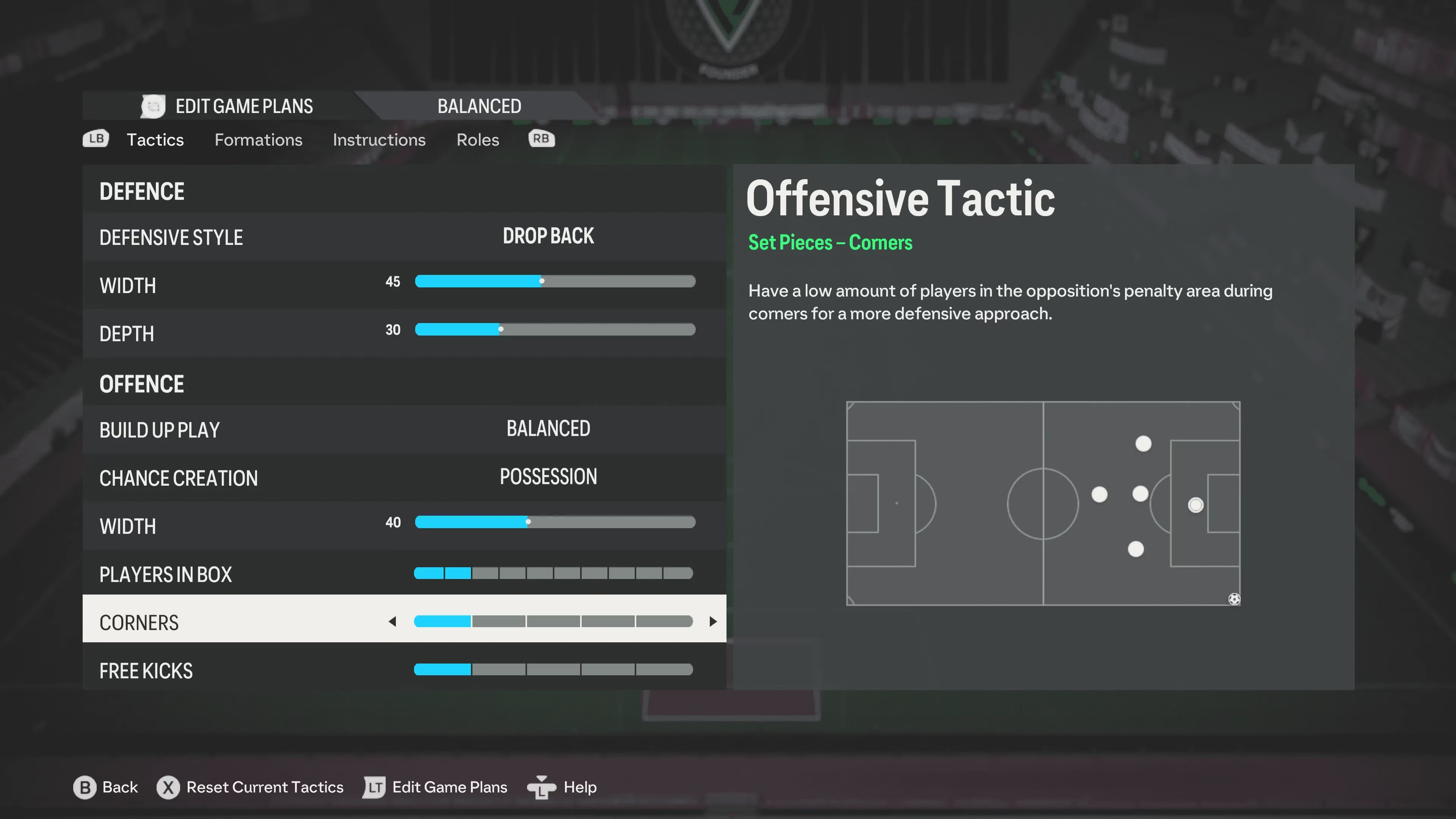
The narrow 4-2-3-1 became my shield. Against opponents who rely on through-balls and central attacks, it gave me maximum control in the middle. I started thinking of my three setups as tools, not identities. The wide 4-2-3-1 was best against deep, defensive opponents. The narrow version was ideal against attacking teams with strong central play. The 4-2-1-3 was perfect when I needed goals and could accept higher risk. That mental shift alone won me more matches than any single player signing.
Here is the switching plan I now use:
| Match situation | Formation | Key instruction |
|---|---|---|
| Chasing a goal | 4-2-1-3 | Box-to-Box CDM + Balanced fullbacks |
| Protecting a lead | 4-2-3-1 Narrow | Holding CDMs + Balanced defense |
| Default/balanced | 4-2-3-1 | Counter buildup + Shadow Striker CAM |
| Opponent sits deep | 4-2-3-1 Wide | Width and crossing |
I also stopped making the mistakes that had quietly sabotaged me. I never use identical CDM roles anymore. I start fullbacks on Defend in FC 26's early stages, then trigger manual overlaps with L1 when I want them forward. I resist the urge to make my CAM a pure playmaker, because Shadow Striker creates more goal threats. And I refuse to ignore stamina. High-stamina players are essential for consistent performance across 90 minutes. ⚠️

The biggest lesson, though, was about commitment. Once I chose my primary formation, I mastered it. I learned every player's movement, timed manual runs, and recognized when to switch. Constantly changing systems gave me variety but no mastery. The most successful FC 26 players are not the ones with the most formations. They are the ones who have perfected their chosen approach and can execute it under pressure.
Formation mastery beats formation variety every single time. Pick your system, perfect your setup, and watch your results improve. That is what finally pulled me out of my FC 26 slump, and it is the first thing I check before every match in 2026. ✅
This discussion is informed by Game Developer, where deeper coverage of systems design and player-behavior analysis helps explain why formation mastery in FC 26 matters more than simply collecting high-rated players. That perspective supports the idea that tactical roles, spacing, and repeatable in-match decisions often determine whether shapes like the 4-2-3-1 or 4-2-1-3 actually perform consistently under pressure.